
Overview
This guide covers the installation of an aftermarket header (exhaust manifold) on the 7A-FE engine. Headers improve exhaust flow and can provide modest performance gains, but require careful attention to fitment and proper sealing.
🕒 Time Required: 4-6 hours
💰 Cost: $200-400 (header + installation)
🔧 Professional Help: Welding required for O2 sensor bung
🔥 CRITICAL: Allow System to Cool
MAKE SURE THE CAR AND EXHAUST SYSTEM IS COMPLETELY COLD! Working on a hot exhaust system will cause bolts to cross-thread and may require sawing off components. Learn from the author's experience - let the car sit overnight before starting this work.
Required Tools & Equipment
Basic Tools
- Jack and sturdy jack stands
- Socket set (various sizes)
- Wrenches
- New gaskets
Specialized Equipment
- Drill and bits (for hole boring)
- Torch cutter
- Welder (or professional welding)
- O2 sensor bung
Step 1: Vehicle Preparation
Raise the front of the vehicle and secure with jack stands. Ensure the setup is extremely sturdy as you'll be working underneath for an extended period. Position jack stands to avoid interfering with header access. Remove wheels for additional clearance if needed.
Step 2: Remove O2 Sensors and Heat Shield
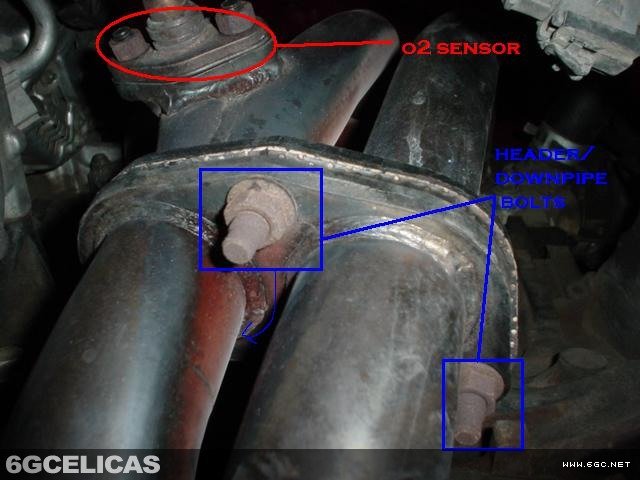
Remove both O2 sensors from the factory header:
- Primary sensor: Accessible from the engine bay
- Secondary sensor: Located underneath near the passenger side axle
Remove the heat shield by unbolting approximately three bolts that are clearly visible.
Step 3: Remove Downpipe from Catalytic Converter
Start by unbolting the downpipe from the catalytic converter (approximately 2 bolts). This provides access to work backwards toward the header.
Step 4: Remove Downpipe from Header
Unbolt the downpipe from the header (2-3 bolts) and remove this section completely. This gives you clear access to the header mounting points.
Step 5: Remove Stock Header
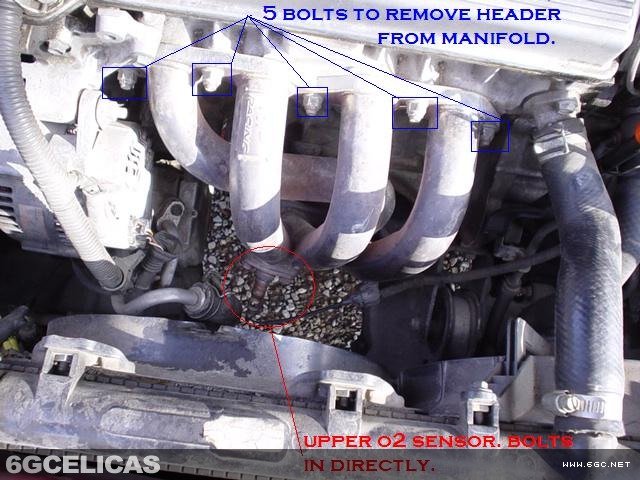
From the engine bay, unbolt the header from the cylinder head using 5 bolts. Remove the upper portion of the header completely.
Step 6: Install New Header
Test-fit the new header before final installation. Important: You may need to bore the mounting holes 2-3mm for proper fitment - this is common with aftermarket headers.
Install using:
- Factory gasket, header-supplied gasket, or new Toyota gasket
- Proper torque sequence on all 5 mounting bolts
- Primary O2 sensor (should thread directly into new header)
Step 7: Install Downpipe
From underneath the vehicle, install the downpipe to the new header using the bolts and gaskets included with the header kit. Ensure proper alignment before final tightening.
Step 8: Connect to Catalytic Converter
A custom pipe section is required to connect the header to the catalytic converter. Pro tip: Consider upgrading to a Corolla-spec aftermarket catalytic converter that matches the header - it may bolt directly without additional piping.
Step 9: Secure Pipe Connections
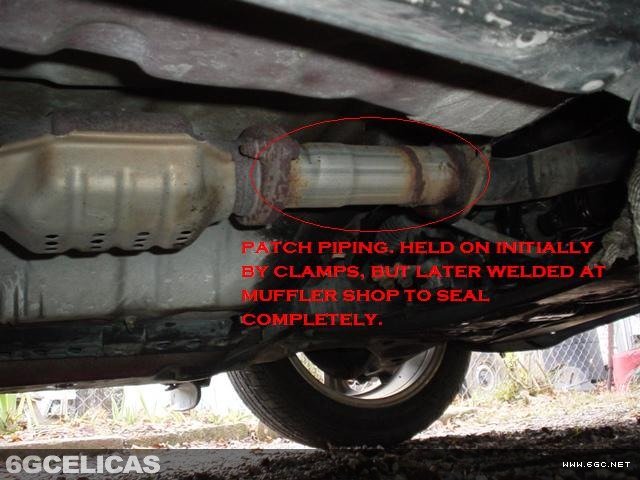
Secure all pipe connections. While exhaust clamps are an option, welding is highly recommended for permanent, leak-free joints. Professional welding ensures proper sealing and longevity.
Step 10: Install Secondary O2 Sensor
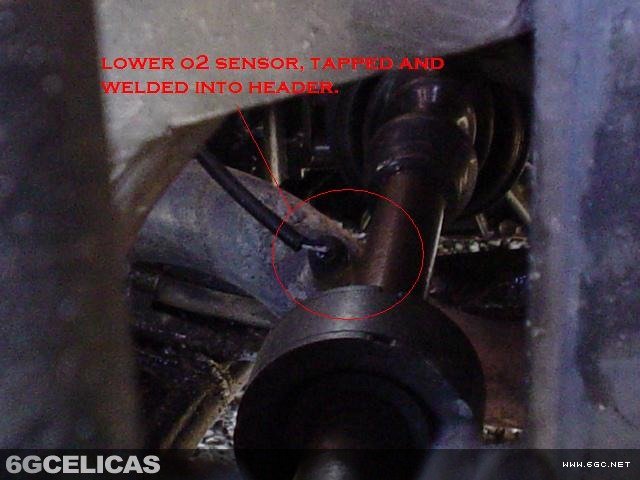
To avoid check engine lights, the secondary O2 sensor must be reinstalled. This requires:
- Cutting a hole in the header with a torch
- Installing an O2 sensor bung (preferred) or welding sensor directly
- Professional welding recommended for proper sealing
Step 11: Final Inspection and Testing
Before completing installation, thoroughly inspect all connections:
- All weld joints for proper sealing
- Header-to-cylinder head bolts properly torqued
- Downpipe connections secure
- Both O2 sensors properly installed
- No exhaust leaks at any joints
Reinstall wheels, lower the vehicle, and take a test drive. Consider resetting the ECU by disconnecting the battery briefly to clear any stored codes.
🏁 Expected Results
- Improved exhaust gas flow and scavenging
- Modest horsepower and torque gains (5-15 hp typical)
- Enhanced engine sound (deeper, more aggressive tone)
- Better throttle response, especially at higher RPMs
- Foundation for future performance modifications