
Overview
If you're getting a check engine light code, you can use this OBD1 diagnostic method to determine what the exact error is. This simple technique uses the car's built-in diagnostic system to read error codes without expensive equipment.
🕒 Time Required: 5 minutes
💰 Cost: Free
Required Tools
- Paper clip (or small piece of wire)
- Vehicle key
Step 1: Locate the Diagnostic Box
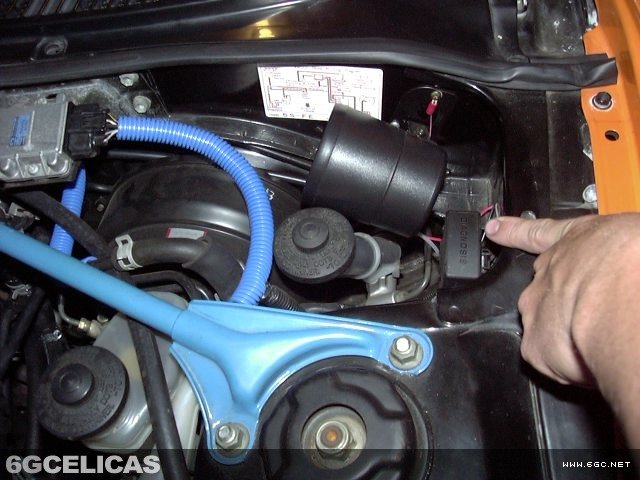
Pop the hood and find the diagnostic connector box on the driver's side of the engine bay, up in the corner by the firewall. It looks somewhat like a fuse box with a removable lid.
Step 2: Open the Diagnostic Box
Open the lid of the diagnostic box. Look inside the lid for the terminal diagram showing the connections labeled TE1 and E1.
Step 3: Bridge the Terminals
Take your paper clip and connect it from terminal TE1 to terminal E1 to create a circuit. This puts the ECU into diagnostic mode.
Step 4: Read the Codes
Go inside your car and turn the key to the "ON" position (do not start the engine). Watch the check engine light flash and count the flashes and pauses carefully.
Step 5: Interpret the Code
The pattern repeats continuously. Each code consists of a series of flashes separated by pauses. For example, code 27 (two flashes, pause, seven flashes) indicates a faulty secondary O2 sensor.
Step 6: Look Up Your Code
Once you have your error code number, you can call an auto parts store like Advance Auto Parts or look up the code in a service manual to determine what component or system needs attention.
OBD1 Trouble Code Reference
Use this table to interpret the flash pattern codes from your diagnostic session:
💡 Money-Saving Tips
- This diagnostic method works on OBD1 vehicles (pre-1996)
- Some codes may indicate multiple possible causes - further diagnosis may be needed
- Clear codes by disconnecting the battery for 30 seconds after repairs
- Most codes shown are ABS-related - engine codes may vary by model year