
Installing JDM-Style Side Markers
Author: Mynzeyes
Overview
Add authentic JDM styling to your Celica with factory-style side markers installed on the front fenders. This modification requires careful measurement, fender drilling, and proper electrical integration to achieve the clean OEM appearance of Japanese Domestic Market vehicles while maintaining full lighting functionality.
⚠️ Difficulty Level: Intermediate-Advanced
🕒 Time Required: 2+ hours
💰 Cost: $30-60 (side marker lights and supplies)
🔧 Tools: Drill, wire tools, measuring equipment
🕒 Time Required: 2+ hours
💰 Cost: $30-60 (side marker lights and supplies)
🔧 Tools: Drill, wire tools, measuring equipment
🚨 Permanent Modification Warnings
- Irreversible fender modification: Drilling creates permanent holes in body panels
- Precise measurement critical: Incorrect placement cannot be easily corrected
- Electrical safety: Improper wiring can cause fuses to blow or electrical damage
- Body panel integrity: Ensure proper rust prevention around drilled holes
- Safety equipment required: Eye protection mandatory during drilling operations
Required Materials & Tools
Parts & Materials
- JDM-style side marker lights (pair)
- Excess electrical wire (14-16 gauge)
- Wire nuts or solder/heat shrink
- Double-sided tape (for positioning)
- Rust prevention primer/paint
Tools Required
- Electric drill with various bit sizes
- Wire cutters/strippers
- Phillips head screwdriver
- Socket set (for fender access)
- Measuring tape and marker
- Safety glasses
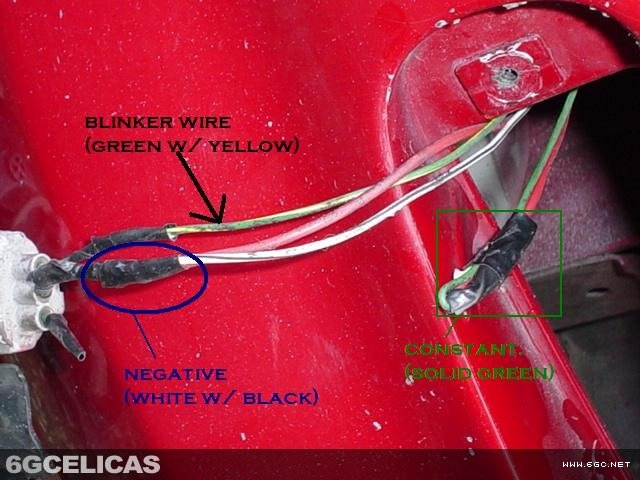
⚡ Electrical Wiring Options
Constant On (Parking Light)
- Positive: Solid green wire
- Negative: White/black stripe wire
- Function: Always on with parking lights
- Result: True JDM parking light behavior
Blinker Only
- Positive: Green/yellow stripe wire
- Negative: White/black stripe wire
- Function: Blinks with turn signal only
- Result: Side repeater indicator
Step 1: Precise Measurement & Positioning
Critical measurement process:
- Choose exact side marker position on both front fenders
- Measure distance down from hood line
- Measure distance forward from door edge
- Measure diagonally from side mirror for reference
- Ensure both sides are perfectly symmetrical
Positioning verification:
- Use double-sided tape to temporarily mount side marker lens
- View from multiple angles to verify placement
- Check clearance with door opening and closing
- Mark position with removable marker
Step 2: Hole Pattern Marking
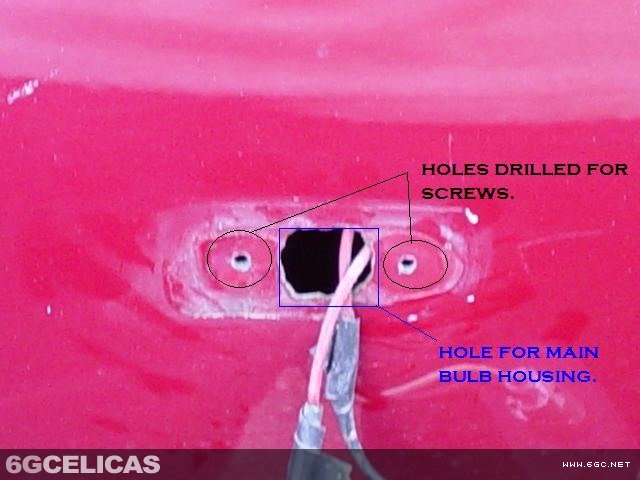
Accurate hole marking:
- Use rubber backing provided with side markers as template
- Mark location for main bulb housing hole
- Mark locations for mounting screw holes
- Double-check all measurements before proceeding
- Verify hole pattern matches side marker exactly
Hole size planning:
- Select proper drill bit size for mounting screws
- Choose slightly larger bit for main housing hole
- Plan to work holes gradually to perfect fit
- Better to start small and enlarge as needed
Step 3: Drilling Operations
Safety and preparation:
- Put on safety glasses before drilling
- Ensure drill bits are sharp and appropriate for metal
- Work slowly to maintain control and accuracy
- Have rust prevention treatment ready for immediate application
Drilling procedure:
- Drill mounting screw holes first with appropriate bit size
- Start main housing hole with smaller bit
- Gradually work up to proper size for snug housing fit
- Test-fit components frequently during enlargement
- Apply rust prevention immediately to fresh metal
Step 4: Side Marker Installation
Physical mounting:
- Insert side marker housing into main hole
- Install rubber grommet for proper sealing
- Secure with original mounting screws
- Verify housing sits flush against fender surface
- Check for proper weather sealing around housing
Step 5: Fender Access for Wiring
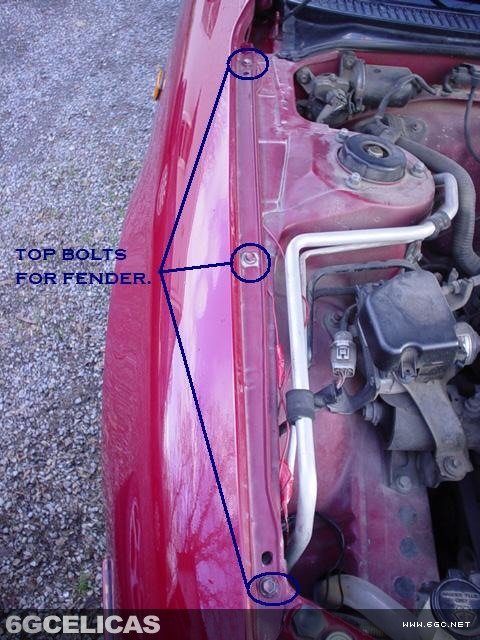
Engine bay bolt removal:
- Remove three bolts at top of fender in engine bay
- Bolts are clearly visible along fender mounting line
- Use appropriate socket size for secure removal
- Keep bolts organized for reassembly
Step 6: Door Jamb Access Point
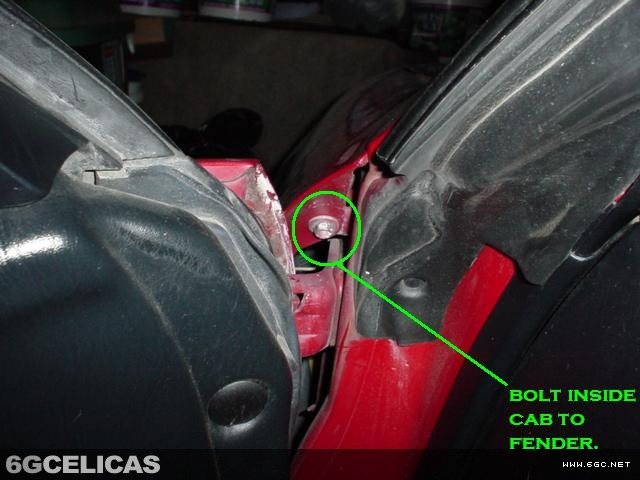
Lower access point:
- Locate bolt near bottom of A-pillar inside door jamb
- Remove bolt to allow fender flexibility
- This provides access to route wiring through fender well
- Exercise caution not to damage door seals
Wire preparation:
- Extend side marker wires with excess wire
- Use proper gauge wire for electrical load
- Allow adequate length for routing to front turn signal
- Route wires carefully through fender well
Step 7: Electrical Integration
Turn signal access:
- Remove front turn signal assembly
- Locate appropriate wiring harness connections
- Identify wire colors for chosen lighting function
- Plan splice locations for clean connections
Wiring connections:
- Negative (Ground): Connect to white/black stripe wire (parking light)
- Positive (Power): Choose based on desired function:
- Solid green wire: Constant on with parking lights
- Green/yellow stripe wire: Blink with turn signals only
- Use wire nuts or solder connections with heat shrink
- Ensure all connections are secure and insulated
Step 8: Testing & Final Assembly
Electrical verification:
- Test side marker function before final assembly
- Verify parking light operation if wired for constant on
- Test turn signal function if wired for blinker operation
- Check that no fuses have blown
- Ensure no unwanted electrical behavior
Final reassembly:
- Secure all wire connections and protect from chafing
- Reinstall front turn signal assembly
- Reinstall all fender mounting bolts
- Install side marker lens
- Repeat entire process on opposite side
🎯 JDM Styling Results
Aesthetic Enhancement
- Authentic Japanese Domestic Market appearance
- Factory-style integration with body lines
- Enhanced side visibility and safety
- Professional OEM-quality installation
Functional Benefits
- Improved side visibility for other drivers
- Turn signal repeater functionality (if wired)
- Parking light extension (if wired)
- Enhanced safety during lane changes
💡 Pro Tips
- Measurement precision: Triple-check all measurements - drilling mistakes cannot be undone
- Hole size strategy: Start small and work up - you can always make holes bigger
- Rust prevention: Treat drilled holes immediately to prevent corrosion
- Wire gauge: Use proper gauge wire to handle electrical load without voltage drop
- Electrical testing: Test thoroughly before final assembly to avoid rework
- Fuse protection: Check if additional fuses are needed for electrical modifications
🔧 Troubleshooting
- Blown fuses: Check for positive wire grounded accidentally
- No operation: Verify proper ground connection to white/black stripe wire
- Dim operation: Check voltage drop due to improper wire gauge
- Intermittent function: Inspect all connections for looseness or corrosion