
Overview
Create custom clear tail lights inspired by the Nissan 240SX Curren design through precision cutting, lens replacement, and professional refinishing. This advanced modification transforms your coupe tail lights into unique clear units with chrome housing accents for a distinctive, JDM-inspired appearance.
🕒 Time Required: 6 hours
💰 Cost: $50-100 (materials and supplies)
🔧 Tools: Rotary tool, lens material, epoxy, paint
🚨 Expert-Level Fabrication Warnings
- Irreversible modification: Cutting destroys original tail lights permanently
- High skill requirement: Requires advanced fabrication and finishing skills
- Precision critical: Millimeter accuracy required for professional appearance
- Safety equipment mandatory: Eye protection, mask, ventilation essential
- Material brittleness: Original lenses are extremely fragile and chip easily
Required Materials & Tools
Cutting & Fabrication Tools
- Rotary tool with large cutting discs
- Smaller cutting discs for corners
- Sanding attachments for rotary tool
- Flat head screwdriver
- Precision measuring tools
Materials & Finishing
- Clear lens material (custom cut to fit)
- Two-part epoxy (4-5 tubes minimum)
- Chrome spray paint
- Clear coat spray paint
- Sandpaper (150 and 1500 grit)
- Duct tape for positioning
🛡️ Essential Safety Equipment
Personal Protection
- Safety glasses or protective eyewear
- Dust mask or respirator
- Work gloves for handling sharp edges
- Long sleeves to protect from debris
Work Environment
- Squirt bottle of water for cooling
- Well-ventilated workspace
- Clean, organized work area
- Proper lighting for precision work
Step 1: Initial Lens Separation
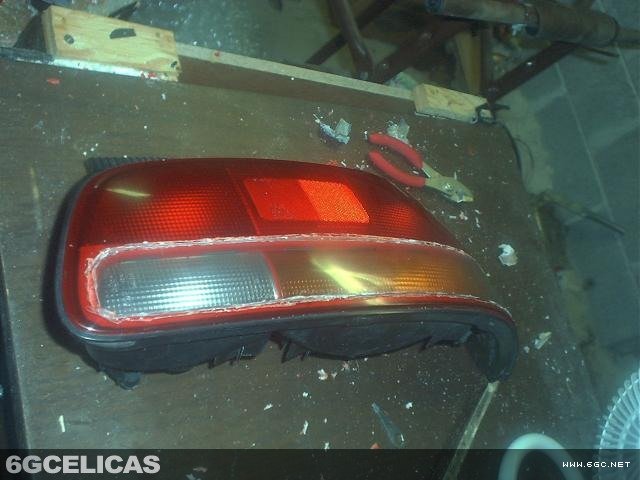
Critical seam identification:
- Locate seam where clear lens and red housing meet
- This precise line determines cutting accuracy
- Examine entire perimeter for consistent seam visibility
- Mark cutting path if necessary for guidance
Rotary tool cutting technique:
- Use large cutting disc for straight sections
- Cut approximately 1/3 inch deep along seam
- Maintain steady hand for straight, clean cuts
- Watch for clear and red shavings as cut depth indicator
- Feel for breakthrough into interior cavity
Step 2: Corner Cutting Challenges
Corner cutting strategy:
- Corners are the most challenging aspect of this modification
- Consider using smaller cutting discs for better maneuverability
- Make primary cut on corner end section
- Follow with shallow cuts on each adjacent edge
- Exercise extreme patience and precision
Lens removal process:
- Use flat head screwdriver to carefully separate cut sections
- Work slowly to avoid chipping brittle plastic
- Original lens should break free cleanly
- Save removed clear lens for later template use
- Note: Original lens has red tinting
Step 3: Interior Component Removal
Amber section removal:
- Use rotary tool to cut center section of amber lens
- Exercise extreme caution not to damage housing
- Create opening for screwdriver access
- Start removal from far edge of light assembly
- Pry out amber section using flat head screwdriver
Clear reverse section:
- Clear reverse section also removes with screwdriver
- Work from accessible edges for clean removal
- Avoid forcing - plastic should separate cleanly
- Clean all debris from housing interior
Step 4: Chrome Interior Finishing
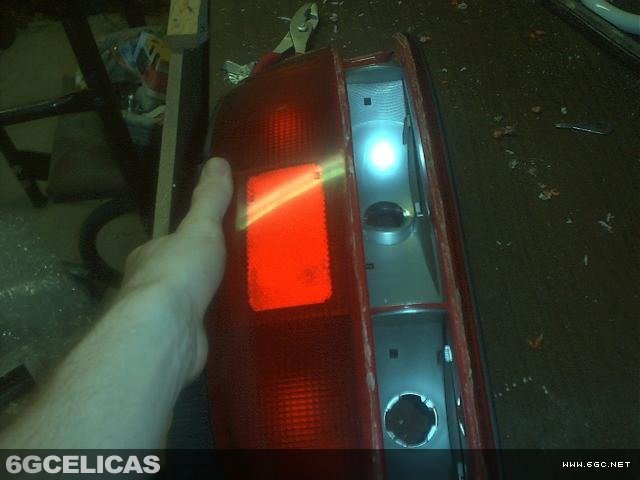
Surface preparation:
- Clean all plastic debris from housing interior
- Sand interior surfaces for paint adhesion
- Thoroughly degrease all surfaces
- Use tack cloth to remove all dust particles
Chrome paint application:
- Carefully tape off all areas not being painted
- Apply chrome spray paint in light, even coats
- Allow proper flash time between coats
- Build coverage with multiple thin applications
- Ensure complete, uniform coverage
Step 5: Custom Lens Fabrication
Critical precision requirement:
- New lens must fit PERFECTLY in original slot
- Even 1mm error will result in poor appearance
- Lens must be single piece spanning entire opening
- Must extend from far edge to reverse section
- Must fit into exact cleft where original lenses were
Fabrication process:
- Use original lens as rough template for dimensions
- Test-fit repeatedly during shaping process
- Make fine adjustments for perfect fit
- Patience is absolutely essential for this step
- Secure in place sparingly with two-part epoxy
Step 6: Assembly & Gap Filling

Outer lens preparation:
- Clean original clear outer lens with rotary sanding attachment
- Work carefully to avoid damage
- Ensure perfect cleanliness for final assembly
- Remove all scratches and imperfections
Final assembly process:
- Position outer lens precisely in place
- Secure temporarily with duct tape
- Fill gaps completely with two-part epoxy
- Remove tape after initial cure
- Fill any remaining holes with additional epoxy
- Allow overnight cure - epoxy will likely sink in
- Apply second layer to build up proper ridge
Step 7: Surface Refinishing
Initial sanding process:
- Begin sanding once epoxy fully hardens
- Avoid rotary tool - use hand sanding for control
- Sand down until surface is completely flat
- Use 150-grit sandpaper for initial leveling
- Check progress frequently to avoid oversanding
Fine finishing preparation:
- Switch to 1500-grit sandpaper for final finish
- Sand entire lens surface uniformly
- Ensure no clear areas remain - complete frosting
- Wash lens very thoroughly after sanding
- Remove all sanding residue completely
- Avoid fingerprints or contamination
Step 8: Clear Coat Application
Spray technique preparation:
- Practice clear coat technique on test pieces first
- Ensure spray gun is properly adjusted
- Work in dust-free environment
- Maintain consistent temperature and humidity
Final clear coating:
- Apply multiple light coats for best results
- Allow proper flash time between coats
- Maintain consistent spray pattern and distance
- Allow complete cure time before handling
- Result: Professional clear Curren-style tail lights
🎯 Currenesque Styling Results
Visual Transformation
- Unique clear lens appearance
- Chrome interior accents
- JDM-inspired Nissan Curren styling
- Professional custom appearance
Fabrication Achievement
- Expert-level modification completion
- Precision custom lens fabrication
- Advanced surface finishing techniques
- One-off custom lighting solution
📸 Fabrication Process Gallery


💡 Expert Tips
- Precision is everything: Millimeter accuracy determines professional vs. amateur appearance
- Corner cutting technique: Use smallest disc available for better control in tight areas
- Lens material quality: Source high-quality clear material for best optical clarity
- Epoxy application: Build up in layers - single thick application will not cure properly
- Clear coat practice: Master spray technique on test pieces before final application
- Patience required: Rushing any step will compromise final quality
⚠️ Expert-Level Project Notice
This modification requires advanced fabrication skills, specialized tools, and extensive patience. The level of precision required for professional results makes this unsuitable for beginners. Consider your skill level carefully before attempting, as mistakes result in destroyed tail lights that cannot be repaired.